

Most meaningful goals take time, and staying motivated over months or years is harder than it sounds. Even with the best intentions, it’s common to lose momentum, especially when progress is slow or setbacks show up.
If working toward your goals starts to feel frustrating or draining, you’re not alone. This is especially true for big goals or goals without immediate rewards.
In this post, you’ll learn about Expectancy Theory and helpful tips designed to support motivation over time. Rather than relying on willpower, this approach focuses on the process of reaching goals, from setting them in a meaningful way to handling setbacks with more confidence and flexibility. The framework is grounded in research from cognitive, clinical, and evolutionary psychology.
What you’ll learn
By the end of this post, you’ll learn that:
- Clear, realistic goals are easier to stay motivated toward than vague goals.
- Staying connected to the future value of a goal helps sustain motivation when progress feels slow.
- Tracking small wins builds confidence and makes progress feel more real.
- Setbacks are a normal part of working toward meaningful goals and don’t mean you’re failing.
- Motivation is easier to maintain when you accept that goals can shift or pause in response to life changes.
This framework is about creating support, not pressure, so you can move forward in a way that actually works for you.
Before You Read: We understand that the information and strategies we share may not feel helpful for everyone. If you are in need of additional support or resources, please reach out to a professional, or connect with our team at layla.care/contact-layla.
The process for achieving goals, and why it matters.
When it comes to reaching meaningful goals, it’s helpful to understand one simple idea first: motivation isn’t about willpower alone. One well researched framework, supported by dozens of studies, a few of which are linked throughout this article, and integrated into numerous theories of motivation is called Expectancy Theory. This reminds us that motivation is shaped by two very human factors:
- how much a goal truly matters to you
- how much you believe you can realistically achieve it
Think of it less as a test you can pass or fail, and more as a guide for understanding what helps people stay engaged over time.

When goals don’t pan out, especially when looking at the long-term ones, it’s rarely because someone “didn’t try hard enough,” and more often because one (or both) of these pieces quietly fades. This can happen when:
- the benefits of the goal feel far off or unclear, which makes it hard to stay connected to why it matters
- day-to-day efforts feel small or disconnected from the greater picture, especially when setbacks start to show up (as they almost always do)
This is completely normal. Our brains aren’t wired to stay motivated by distant, abstract outcomes without some form of support.
That’s where the framework below comes in. Instead of pushing harder and harder, it helps to set goals in a way that supports motivation so that you can stay grounded and steady over time.
Through these exercises, you’ll be supported in:
- clarifying what your goal really is, so it feels meaningful from the start
- staying connected to the future benefits, even when progress feels slow
- noticing and tracking progress in ways that feel doable and encouraging
- planning for challenges with compassion, rather than self-criticism
There’s no rush here. Let’s take this one step at a time.
Step 1: Set Clear Goals That Actually Matter to You
Going back to the Expectancy Theory formula, strengthening motivation starts with making sure your goal feels meaningful to you from the very beginning.
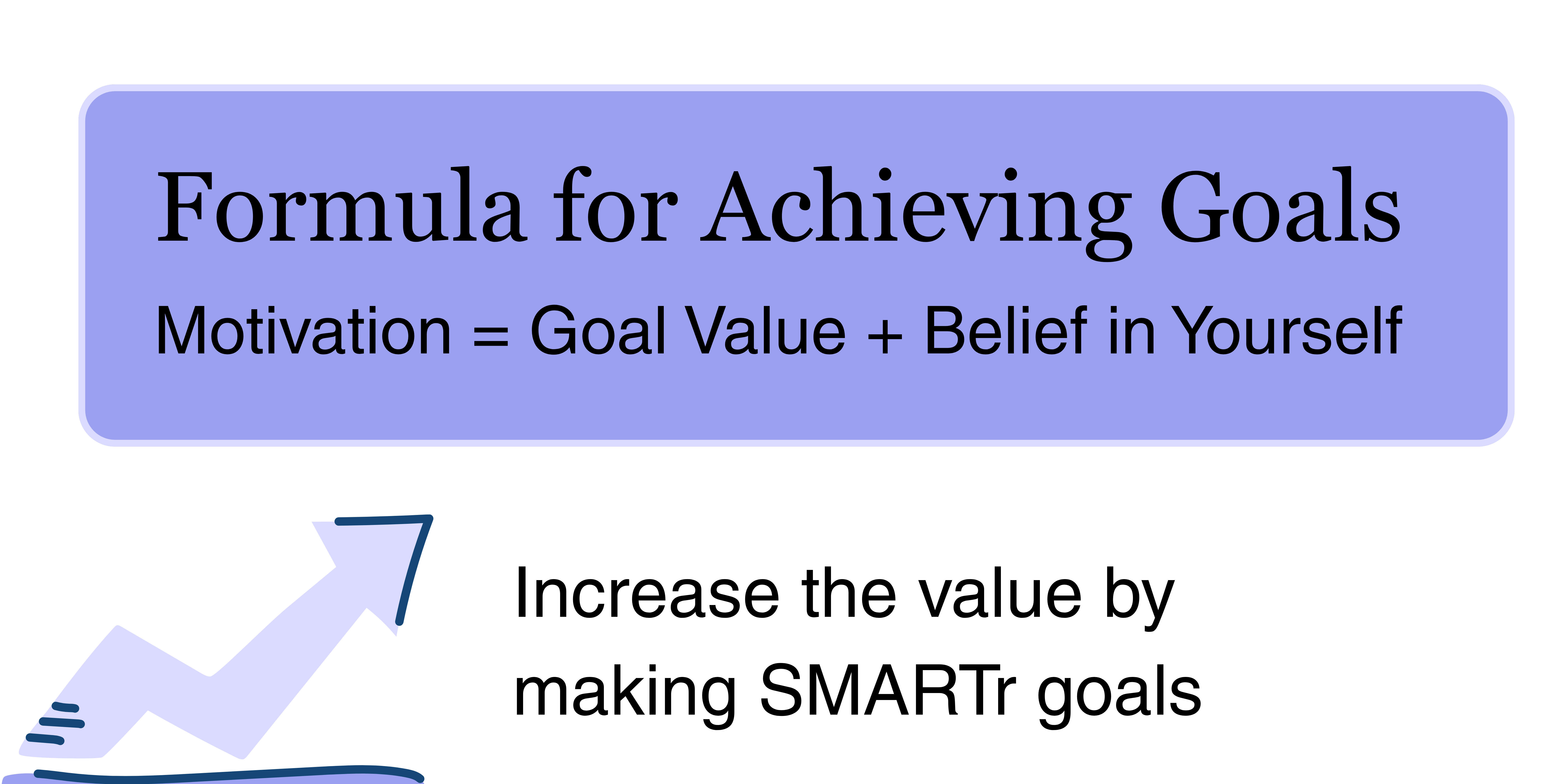
For a goal to feel valuable, it’s helpful to connect it to a bigger ambition you care about, whether that’s becoming more confident in starting a new hobby, connecting with friends more often, or something else that matters to you. Big-picture ambitions like these are important, but they can also feel overwhelming or hard to approach all at once.
To support your motivation, it can help to translate those broader ambitions into goals that feel clearer and more manageable. One common way to do this is by setting goals that are specific, measurable, attainable, relevant, and timed, these are called “SMART” goals.
Let’s practice. Think of a goal and determine how you can make it SMART? Below is a simple example.
- Specific - Clearly define your goal. Who, what, where, and how? Be detailed.
- Measurable - Establish how you will evaluate whether you have reached your goal. What will you assess and how will you quantify it? Include numbers.
- Attainable - Ensure your goal is challenging but realistic. Is it something that doesn’t rely too much on luck or circumstances beyond your control?
- Relevant - Ensure this goal serves your overarching ambition. Why did you choose this goal? Does it serve your values and ultimate aspiration(s)?
- Timed - Set a clear schedule with deadlines. Include specific dates.
Motivation is easier to build when your goal feels meaningful from the start.
A goal has more value when it connects to something you care about, like saving for a trip you’re excited about. For example, when you say “I want to travel more” it can feel nice, but it’s often hard to know what to do next.
Instead, turning that idea into a clear goal, such as “I want to save $1,500 over the next six months for a trip.” This can make the goal feel more real and achievable. Clear, specific goals help you stay focused and remind you why the effort matters.
Step 2: Keep Your Goals Meaningful With Future-Focused Thinking
Even with SMART goals, people can still lose motivation over time. This happens in part because of a psychological tendency called “delay discounting.”
Delay discounting describes how rewards decrease in value the farther they occur in the future. Many people, for example, prefer $10 today rather than $15 next month.
This kind of discounting happens automatically in our brains. Without really noticing it, we tend to value immediate rewards more than future ones. This tendency likely developed because, for our ancestors, focusing on what was available right away helped them survive in a world that was uncertain and often unsafe.
That same instinct still shows up in humans today, even when we’re working toward goals that take time to pay off. Delay discounting will make future rewards feel less important than immediate comfort, which can quietly pull us off track from our long-term goals because our focus is on what’s right in front of us.
With that in mind, let’s return to the simple motivation formula we started with and see how it can support long-term goals.
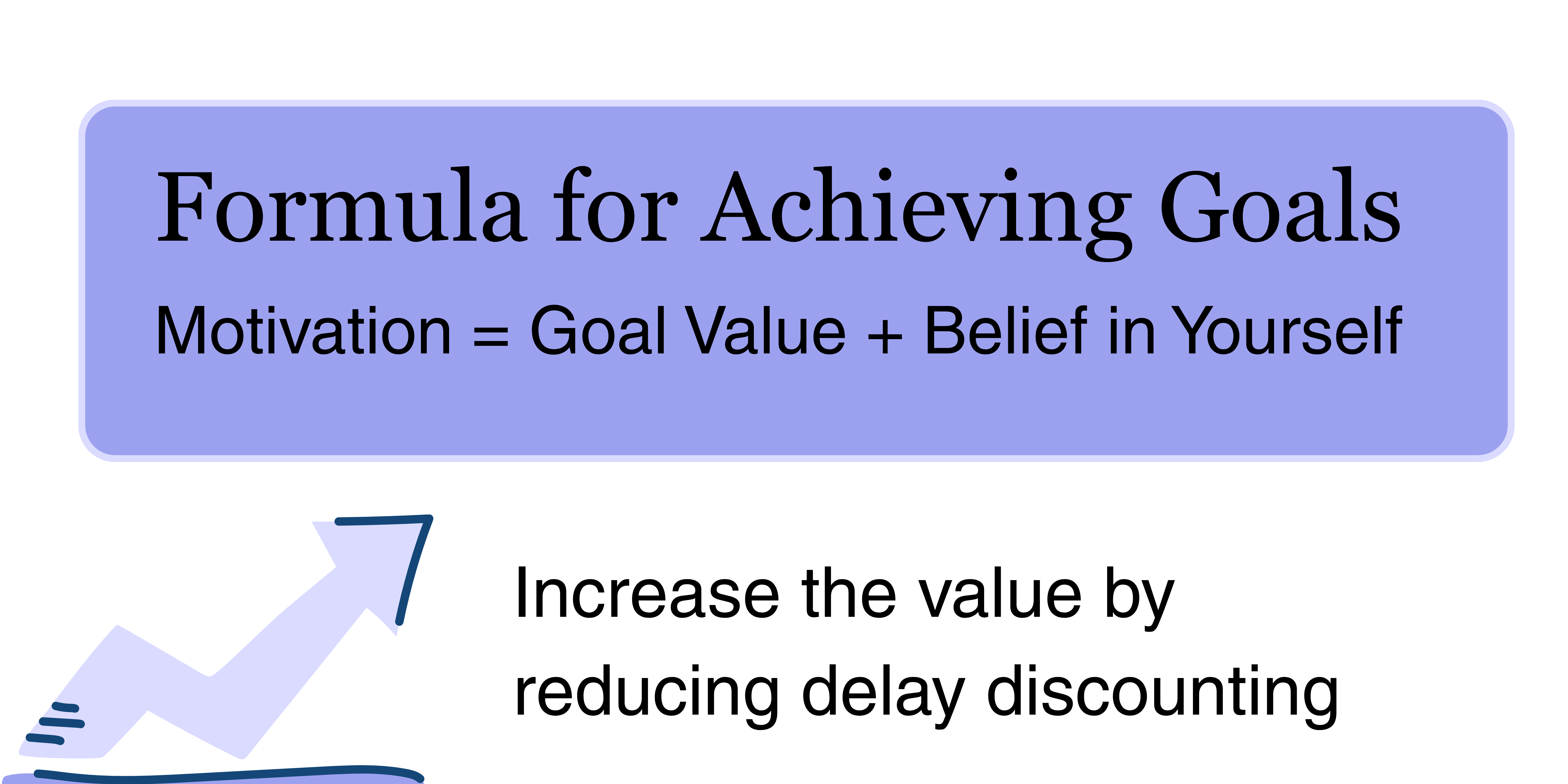
If you are looking to increase the value of your long-term goals and reduce delay discounting, there is evidence that suggests engaging in what psychologists call “episodic future thinking.”
Episodic future thinking describes imagining yourself in future experiences.
For example, imagine that it’s next spring, and you are lounging on a beach with the breeze in your hair and the sun in your face. This is an episodic future thought (and quite a lovely one at that).
To reduce delay discounting as much as possible (and bring more value to your long-term goals), you can start by visualizing the future experiences that you imagine are:
- Related to your goal. Will achieving your goal potentially lead to this experience? Were you able to take the beach vacation in part because you reached your goal? Would imagining something else be more related—perhaps that you successfully developed a cool new product, got a raise, or moved up the ranks within your company?
- Positive. Is the experience enjoyable? Do you actually like going to the beach?
- Exciting. Does imagining the experience energize you? Is a beach vacation something you would find fun and invigorating?
- Realistic. Is this something that feasibly could happen? Perhaps you would like to win the Nobel Prize too, but what is the chance you could make that happen?
- Vivid. Does it include specific details? What is the time and setting? What do you feel, smell, and see? How does the sand feel on your toes, do you hear the crashing of the waves?
A great thing about future episodic thinking is that the possibilities are endless and you can do it almost anywhere.
Step 3: Tracking Your Progress To Build Motivation
Next we turn to the second half of the motivation equation - belief in achieving the goal.
Step 3 addresses how people often underestimate their ability for achieving goals because it’s difficult to see evidence of how today’s small behaviors can result in sometimes big and far-away outcomes.
In contrast, it is easy to see when your actions are not productive, whether it’s because you know you spend too much time watching cooking videos or because you regularly put in a lot of effort but you still don’t feel like you are close to your goal.
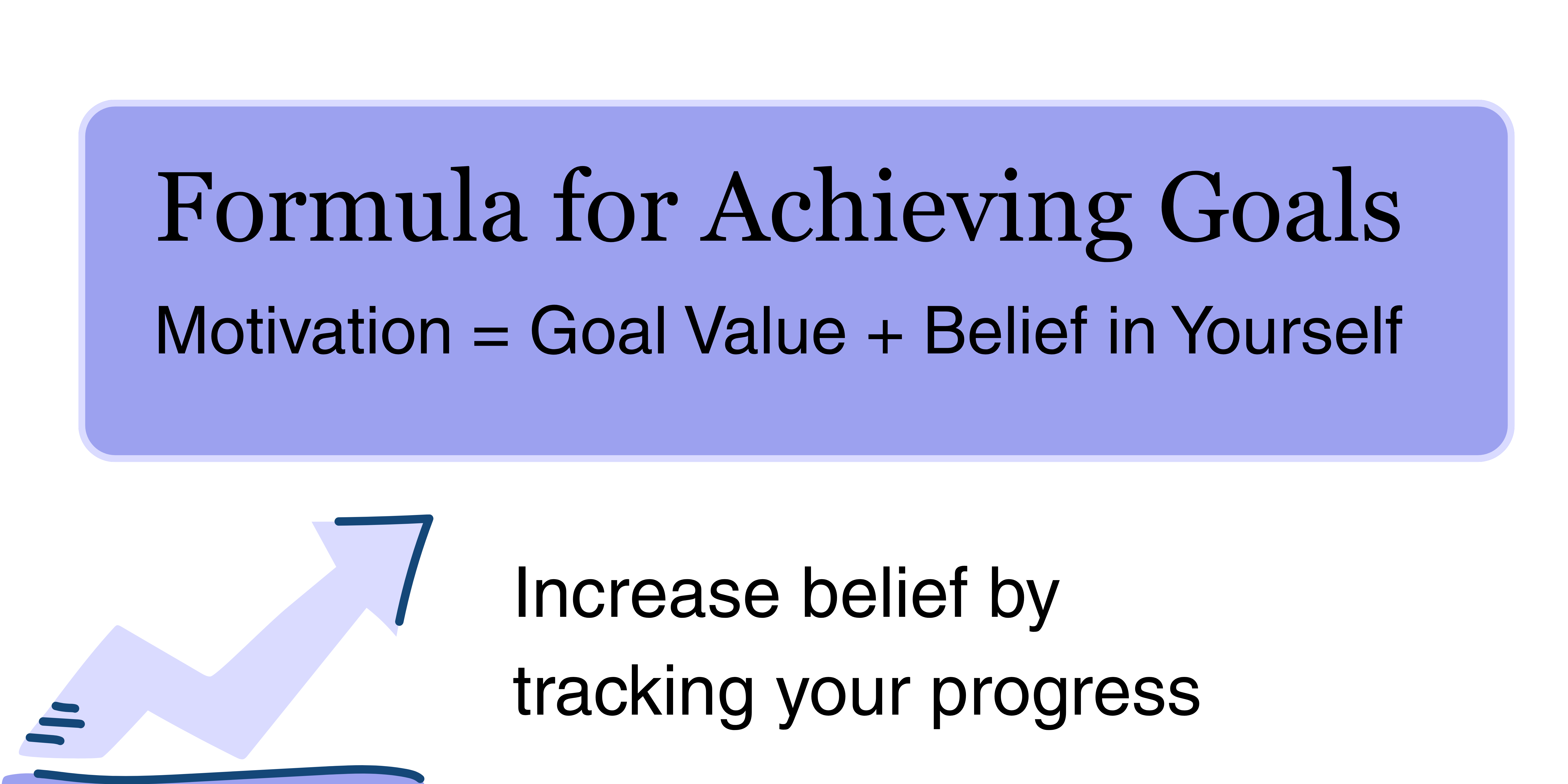
Creating and rewarding subgoals to track your progress can help you recognize the evidence that you’re achieving goals even though it may not feel like it.
How to Create Subgoals
Breaking big goals into smaller steps can make progress feel more immediate and easier to see. These smaller steps are often called subgoals and they help turn long-term goals into something you can work towards with day to day actions.
When creating subgoals, it can help to work backward from your long-term goal to what you need to do next week or this month. This is sometimes called reverse planning, and it’s been shown to boost motivation and productivity.
As you begin to work backward, start by identifying what needs to happen before the final goal and then set gentle deadlines along the way.
Try to include subgoals at different timeframes, such as weekly, monthly, and longer-term milestones. You don’t need to plan every single day in detail. Instead, focus on simple, repeatable actions that support your goal. Over time, these can turn into habits that keep you moving forward, even when motivation dips.
For example, if your goal is to save for a vacation, helpful subgoals might include:
- creating a simple budget and checking in on it weekly
- setting aside time to meal prep to reduce eating out
- planning more at-home time with friends to keep spending balanced
- leaving room for enjoyment, so saving doesn’t feel like deprivation
You might also find it helpful to create a visual way to track your progress, something that shows what you’ve already done and how you’re moving toward your bigger goal over time.
- An old fashioned paper tracker where goals are highlighted and achievements are tracked works really well. This could look like adding a star sticker for every day you bring lunch to work and actually eat that lunch.
- Goal tracking apps or shared spreadsheets are also helpful.
Don’t forget to schedule time to reassess your subgoals at regular intervals. Evaluate what is and is not working, and update over time.
Reward yourself for each subgoal
Some reward comes intrinsically from feeling good about achieving your goals. But to boost the incentive and highlight evidence of your accomplishments over time, it helps to include explicit rewards.
These rewards can be small and should be tied to successful completion of the subgoal. This is about acknowledging and praising your progress rather than the rewards themselves.
Importantly, ensure your rewards are relatively quick and reliable. If you’re the kind of person who is bad at following through on rewards for yourself, consider:
- Automating the reward/making the delivery of it a habit.
- Example: Add in a weekly lunch with a colleague or friend to your calendar
- Enlisting social support/pressure.
- Find a weekly accountability buddy to keep you consistent and on track
Remember that this is all about increasing your motivation by making the evidence of your successes clear.
Step 4: Stay Motivated by Planning for Challenges
Finally, it’s important to know that you may encounter setbacks along the way, and most people do. This is a part of the goal-setting process.
.png)
So how do successful goal setters and achievers deal with feelings of sadness, anxiety, and frustration without losing confidence in achieving goals? One solution is developing an action orientation. Action orientation refers to the ability to disengage from one’s negative or harmful emotions and to foster the emotions necessary for effective goal pursuit.
This is contrasted with state orientation, which refers to the tendency to ruminate and overthink on negative feelings, worries, or failures.
How to Follow Through on Your Goals, Even When It’s Hard
When goals feel unclear, it’s easy to get stuck in your head instead of moving forward. That’s a very human experience. Even with clear, SMART goals, motivation can still come and go.
This often happens when a goal doesn’t fully matter to you, when urgent tasks take over, or when life events shift your priorities. Overthinking and constantly adjusting your plan can also make it harder to take action. If any of this sounds familiar, you’re not doing anything wrong. It usually just means your goal needs a bit more support, or that now might not be the right time to focus on it, and that’s okay.
Sometimes life happens, and goals need to pause or move down the list. That isn’t failure. It’s being responsive to what you need right now.
When a goal does feel right to come back to, it can help to shift from constant thinking to gentle commitment. Small changes, like choosing specific times to work on your goal, asking others for support, reducing distractions, or limiting how often you revisit the plan, can make taking action feel more manageable.
The point isn’t to push yourself no matter what. It’s to create enough support to move forward when the timing is right, and to trust yourself to adjust when it’s not.
A final recap on staying motivated
Staying motivated with big, long-term goals can be challenging for most people. Not because something is wrong, but because it’s difficult to fully feel the value of goals that are far away, and to see how today’s small actions really add up over time.
To strengthen how meaningful goals feel, try this:
- Make your goals clearer and more realistic. Setting goals that are specific, measurable, attainable, relevant, and time-based helps you understand what you’re working toward and why it matters.
- Stay connected to the future you’re working for. Taking time to imagine how achieving your goal will feel can make the effort today feel more worthwhile.
To build confidence that you can actually get there:
- Break goals into smaller steps and celebrate progress. Subgoals help you notice what you’re accomplishing along the way and remind you that your efforts count.
- Practice taking action, even when things don’t go perfectly. Learning how to respond to setbacks with flexibility and self-compassion helps you keep going and builds trust in your ability to handle challenges.
At the heart of all of this is support, not pressure. Motivation grows when goals feel meaningful, progress feels visible, and you give yourself room to adjust along the way.
A Message from Layla
If you require any immediate support, please reach out to a professional, or click here to explore our crisis and community resources. If you’d like to inquire about finding mental health support that’s right for you, a member of our team is happy to assist you. You can email us at contact@layla.care for any inquiries, or complete our intake form to reach out to a member of our care team.


.webp)