

What is self-discipline?
Self-discipline is the ability to stay committed to a goal, even when motivation is low, distractions are present, or progress feels slow. It involves managing thoughts, emotions, and behaviours in ways that support what matters most to you over the long term.
Many people assume that self-discipline is something you either have or you don't. However, research across psychology, neuroscience, and behavioural science suggests that self-discipline is a skill that can be developed over time [1]. Like any skill, it often becomes stronger through practice, repetition, and supportive habits.
It is normal for self-discipline to fluctuate based on our current emotional capacity that can be impacted by stress that exists in our life. However, self-discipline is not only about willpower in the moment, but is often built by creating routines, environments, and strategies that make it easier to follow through on your intentions, even when motivation comes and goes.
Takeaway tips: Putting self-dsiscipline into practice
- Connect effort to something meaningful. Self-discipline often becomes easier when a task feels connected to something you care about, whether that's your health, relationships, education, work, family, or personal values.
- Notice small wins. Taking time to recognize progress, even when it feels minor, can help reinforce effort and build motivation over time.
- Focus on the next step. Large goals can feel overwhelming. Breaking them into smaller, manageable actions can make it easier to get started and maintain momentum.
- Expect setbacks. Progress is rarely linear. When things don't go as planned, get curious. By approaching the situation with curiosity rather than self-criticism, we open the room to reflect about what got in the way and can recognize where shifts need to happen.
- Practice consistency over perfection. Self-discipline is built through repeated actions over time, not by getting everything right. Returning to a goal after a setback is often more important than avoiding setbacks altogether.
- Create supportive habits and environments. Reducing distractions, establishing routines, and making desired behaviours easier to start can help support follow-through when motivation is low.
- Focus on the process, not just the outcome. Sustainable change tends to come from the habits and routines we practice each day, rather than from concentrating only on end goals.
Building self-discipline is not about forcing yourself to work harder and do more, it is about intentionally creating the conditions that support consistent action that align with the things that are most important to you.
────────────
This article explores practical ways to:
- Stay committed to meaningful goals when motivation fluctuates
- Build habits and routines that support follow-through
- Navigate setbacks with greater flexibility and self-awareness
- Strengthen self-discipline through consistent practice over time
────────────
Before You Read: We understand that the information and strategies we share may not resonate with everyone. If you're looking for additional support, we encourage you to reach out to a qualified mental health professional. If you're considering therapy, Layla's Care team can help simplify the process through personalized therapist matching and support.
What research suggests about building self-discipline
Research suggests that self-discipline is shaped by the way we experience effort, connect our actions to meaningful goals, respond to setbacks, and develop habits over time. Rather than relying on willpower alone, self-discipline often grows through repeated experiences that strengthen our ability to follow through, even when motivation fluctuates.
Why self-discipline can feel easier over time
One explanation comes from a psychological concept known as learned industriousness, which is the ideathat when effort is repeatedly followed by positive outcomes, our brains can begin to associate effort with reward [2]. Over time, effort may feel less discouraging and more worthwhile because it becomes connected to progress, accomplishment, or personal meaning.
Think about learning a new skill, finishing a challenging project, or completing a long run. These activities require energy and persistence, but many people also experience a sense of satisfaction from seeing their efforts pay off.
Research on the “IKEA Effect” reflects a similar idea: people often place greater value on things they have helped create themselves [3]. The process of investing effort can increase our sense of ownership, accomplishment, and connection to the outcome. Recent neuroscience studies suggest that people can learn to value effort more positively when it is consistently linked to progress and rewarding outcomes [4]. Over time, challenging work may begin to feel more worthwhile and reinforcing.It’s natural to think, “of course I’d rather be relaxing on a beach than studying for an exam or re-checking a financial statement for the tenth time”. Rest and enjoyment are important parts of life. At the same time, many meaningful experiences require effort. While effort does not always feel enjoyable, it can begin to feel more purposeful and rewarding when it is connected to progress, growth, or something that matters to us personally.
Practical steps to strengthen the connection between effort and reward
- Choose challenges that stretch you without overwhelming you. Look for goals that require effort, but still feel possible with the time, support, and resources you have. A helpful challenge might feel uncomfortable or require persistence, but it should not feel so far out of reach that you shut down or give up before you begin. When a goal feels too big, try breaking it into a smaller next step that still feels meaningful.
- Focus on progress rather than perfection. When every effort is measured against an ideal outcome, it's easy to overlook meaningful progress. Paying attention to small gains can help maintain motivation and make long-term goals feel more achievable.
- Notice when you make an effort or follow through. Whether it's finishing a task, having a difficult conversation, or following through on a commitment, pause to notice it. Recognizing these moments can help strengthen the connection between effort and a sense of accomplishment, making it easier to keep going.
- Recognizing what your effort is moving you toward. Whether it's supporting someone you care about, improving a skill, completing a project, or moving closer to a personal goal, connecting effort to a meaningful outcome can make it easier to stay engaged over time.
How to find meaning in hard work when you’re not motivated
Not every task will feel enjoyable, interesting, or personally meaningful in the moment. In fact, many of the responsibilities that make up daily life are repetitive, inconvenient, or simply things we need to do. Motivation research, including expectancy theory, suggests that people are more likely to persist when they understand why their efforts matter [5]. When motivation is low, reconnecting with the larger purpose behind a task can make it easier to stay engaged.
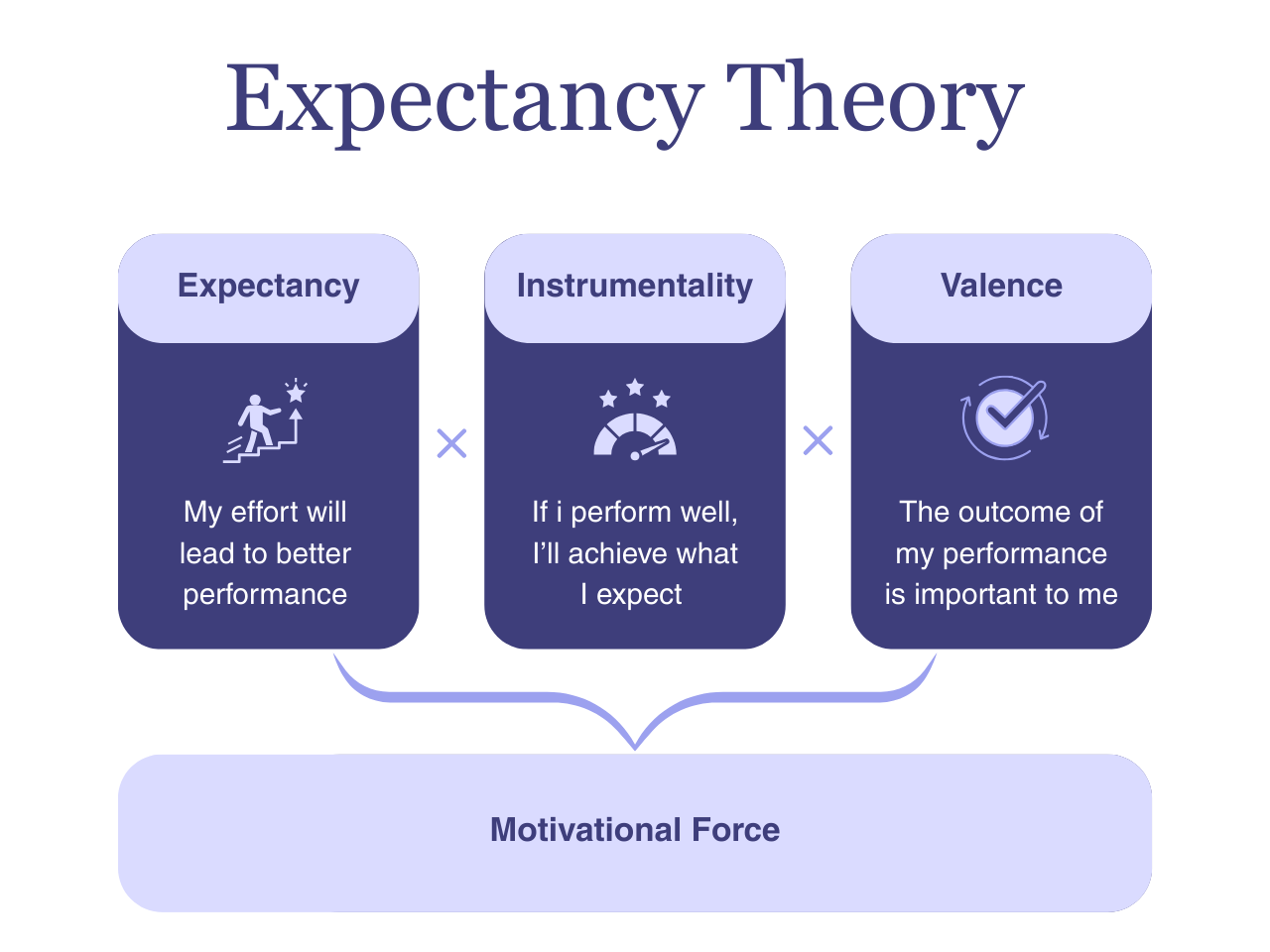
Hard work can also support important psychological needs. According to Self-Determination Theory, effort can help foster a sense of competence, autonomy, and purpose [6]. It can also help us live in ways that reflect our values, whether that means caring for family, supporting our health, contributing to our communities, or working toward personal goals.
For example, preparing meals, studying for an exam, completing paperwork, or tackling household chores may not feel rewarding in themselves. However, those same tasks can feel more worthwhile when they are connected to something that matters to us.
Meaning does not necessarily make difficult tasks enjoyable. However, it can provide a sense of direction when motivation comes and goes.
When meaning feels absent, research on job crafting suggests that small, intentional changes to the way we approach our work can help make it feel more meaningful [7]. Looking for opportunities to use existing strengths, connect with others, focus on the impact of your efforts, or take on responsibilities that feel more engaging can help strengthen that sense of purpose.
How to treat setbacks as part of the self-discipline process
Everyone encounters setbacks., They are not signs of failure, but a normal and expected part of working toward any meaningful goal. Research by grit, a concept developed by psychologist Angela Duckworth suggests that persistence over time matters [8]. The key is not avoiding setbacks altogether, but learning how to re-engage when they happen.
You may lose momentum on a project, struggle to return to a routine after time away, or find yourself falling short of a goal you had hoped to maintain. These experiences can be frustrating and discouraging, but they are also a normal part of working toward meaningful goals. Sometimes, taking a step back to acknowledge disappointment, reflect on what happened, and allow yourself time to take a break can be an important part of the process [9, 10]. A setback does not erase the progress you have already made, nor does it mean you lack self-discipline.
What often matters most is what happens next. Returning to a goal after a setback, even in a small way, can help rebuild momentum and strengthen confidence in your ability to keep going.
Research suggests that focusing on the process can be especially helpful when working toward a goal [11]. Studies have found that people learning a new skill often perform better and feel more confident when they focus on the specific steps involved, rather than concentrating only on the desired outcome [12].
If progress feels slower than you hoped, try bringing your attention back to the next step in front of you. Self-discipline is often built through small, repeated actions rather than a single burst of motivation.
Questions to ask yourself after a setback
- How can I use this setback as an opportunity to learn, adapt, or improve?
- Is there anything about my approach that I would change next time?
- What would I say to a friend experiencing the same setback?
- Is this a signal to adjust my approach, or to keep going?
- What is one small action I can take right now to re-engage?
How to strengthen self-discipline through daily practice
Like many skills, self-discipline tends to strengthen through repeated practice. Research suggests that regularly exercising self-control in small ways can help build confidence in your ability to follow through, even when motivation is low.
Rather than relying on willpower alone, consider creating opportunities to practice consistency in everyday life:
- Start with one small task you've been avoiding. Taking action before you feel fully motivated can help build momentum.
- Pause before acting on an impulse. Waiting a few minutes before checking a notification or responding to a distraction can strengthen your ability to act intentionally.
- Practice delayed gratification. Completing a task before moving on to a reward can help reinforce longer-term goals.
- Create small commitments and keep them. Consistently following through on manageable goals often builds more self-discipline than setting overly ambitious ones.
Over time, these small actions can help strengthen your ability to tolerate discomfort, stay focused on what matters, and follow through on your intentions. Self-discipline is rarely built through a single act of willpower. More often, it develops through small, repeated choices that accumulate over time.
────────────
Finding the right support
If you require any immediate support, please reach out to a professional, or click here to explore our crisis and community resources. If you’d like to inquire about finding mental health support that’s right for you, a member of our team is happy to assist you. You can email us at contact@layla.care for any inquiries, or complete our intake form to reach out to a member of our care team.
────────────
References and external links
[1] Eisenberger, R. (1999). Eye on Psi Chi: Building a mystery theory. Psi Chi Journal. https://www.psichi.org/page/033EyeSpr99aEisenber
[2] Eisenberger, R., & Cameron, J. (1992). Detrimental effects of reward: Reality or myth? Psychological Review, 99(2), 248–273. https://doi.org/10.1037/0033-295X.99.2.248
[3] Amabile, T. M., & Kramer, S. J. (2012). The power of small wins. Journal of Consumer Psychology, 22(1), 4–13. https://doi.org/10.1016/j.jcps.2011.08.002
[4] University of Otago. (2022, January 27). The importance of making progress. ScienceDaily. https://www.sciencedaily.com/releases/2022/01/220127104233.htm
[5] Locke, E. A., & Latham, G. P. (2015). New developments in goal setting and task performance. Psychology, 6(1), 1–12. https://www.scirp.org/journal/paperinformation?paperid=53093
[6] Deci, E. L., & Ryan, R. M. (2008). Self-determination theory: A macrotheory of human motivation, development, and health. Canadian Psychology, 49(3), 182–185. https://doi.org/10.1037/a0012801
[7] Wrzesniewski, A., Berg, J. M., & Dutton, J. E. (2010). Turn the job you have into the job you want. Harvard Business Review, 88(6), 114–117.
[8] Duckworth, A. L., Peterson, C., Matthews, M. D., & Kelly, D. R. (2007). Grit: Perseverance and passion for long-term goals. Journal of Personality and Social Psychology, 92(6), 1087–1101. https://doi.org/10.1037/0022-3514.92.6.1087
[9] Lomas, T., & Ivtzan, I. (2016). Second wave positive psychology: Exploring the positive–negative dialectics of wellbeing. Journal of Happiness Studies, 17(4), 1753–1768. https://doi.org/10.1007/s10902-015-9668-y
[10] Sonnentag, S., & Zijlstra, F. R. H. (2006). After work is done: Psychological perspectives on recovery from work. European Journal of Work and Organizational Psychology, 15(2), 129–138. https://doi.org/10.1080/13594320500513855
[11] Kaftan, O. J., & Freund, A. M. (2018). The way is the goal: The role of goal focus for successful goal pursuit and subjective well-being. In E. Diener, S. Oishi, & L. Tay (Eds.), Handbook of well-being. DEF Publishers. https://doi.org/10.5167/uzh-147437
[12] Zimmerman, B. J., & Kitsantas, A. (1997). Developmental phases in self-regulation: Shifting from process goals to outcome goals. Journal of Educational Psychology, 89(1), 29–36. https://doi.org/10.1037/0022-0663.89.1.29



.webp)